1.Implant Materials
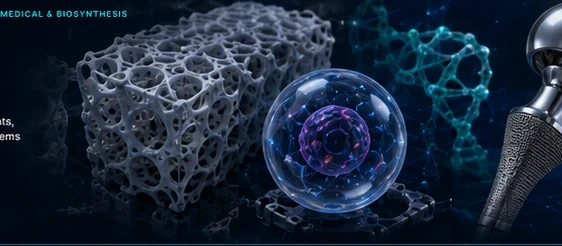
Titanium/metal, ceramic, polymer and composite material families for implant and load-bearing interfaces.
Open Topic →Materials architecture for implants, regenerative systems, medical devices, sensing, drug delivery and biofabrication — with medical qualification kept separate from research screening.
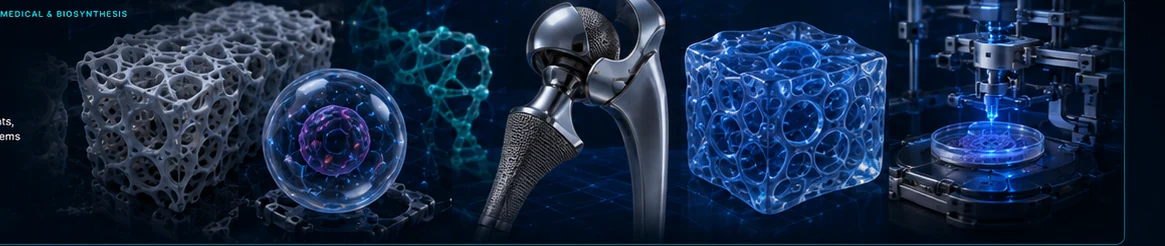
Titanium/metal, ceramic, polymer and composite material families for implant and load-bearing interfaces.
Open Topic →
Hydrogels and soft material systems for interfaces, delivery, tissue support and dynamic biological environments.
Open Topic →
Porous, polymer, ceramic and composite scaffold material families for tissue engineering architectures.
Open Topic →
Biopolymers, hydrogels, particles and responsive carrier-material classes for controlled delivery architectures.
Open Topic →
Piezoelectric, conductive, optical and electronic material families for biointerfaces and sensing.
Open Topic →
Bioactive ceramics and bio-inorganic hybrid families for structural and functional integration.
Open Topic →
Barrier polymers, coatings and process-compatible materials supporting sterile manufacturing and preservation.
Open Topic →| Application Area | Representative Material Families | Core Functions | Environment / Stressors | Processing / Qualification Focus |
|---|---|---|---|---|
| Implants | Ti/CoCr/ceramics/PEEK-class polymers and composites | Load support, wear / interface behavior, tissue compatibility | Physiological environment, fatigue, wear, sterilization | Biocompatibility, mechanical, surface and process qualification |
| Tissue Engineering | Hydrogels, biopolymers, ceramics, porous scaffolds | Cell support, regeneration, transport, structure | Physiological exposure, degradation, sterilization | Material identity, biological response, manufacturing control |
| Wound Care | Hydrogels, biopolymers, fibrous and antimicrobial material systems | Moisture control, protection, delivery, healing support | Biological fluids, handling, storage, sterilization | Biological safety, sterility, barrier / shelf-life evidence |
| Biosensors | Conductive polymers, metals, carbon/2D materials, hydrogels | Signal transduction, biointerface, sensing | Fluid exposure, drift, fouling, flexing | Biocompatibility, calibration, encapsulation, reliability |
| Smart Wearables | Elastomers, conductive textiles, piezo materials, adhesives | Conformal sensing, actuation, attachment | Skin contact, sweat, flexing, repeated use | Skin-contact materials, durability, cleanability |
| Biofabrication | Bioinks, hydrogels, polymers, ceramics, cell-compatible supports | Printing / forming, temporary or lasting scaffolding | Process sensitivity, sterility, degradation | Material/process traceability, sterility, reproducibility |
| Medical Packaging | Barrier films, polymers, coatings, trays / seals | Sterile barrier, protection, transport, shelf life | Sterilization, moisture/oxygen, handling | Barrier integrity, material compatibility, process validation |
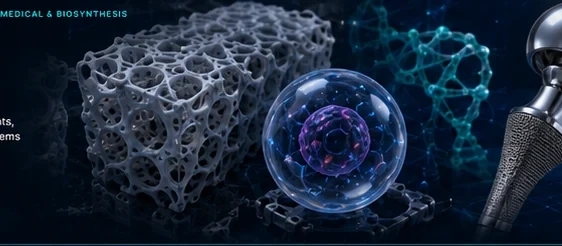
Metals, ceramics, polymers and surface systems balancing biocompatibility, wear and fatigue.
Explore →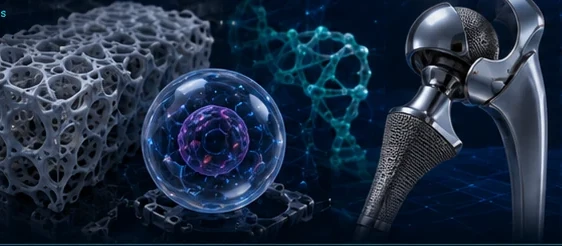
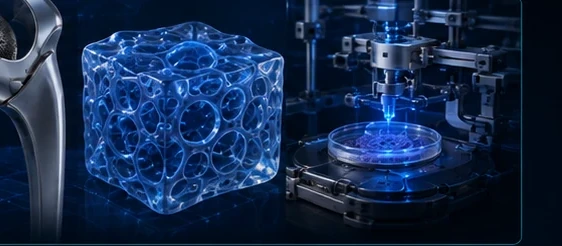
Scaffolds, hydrogels, bioresorbables and porous structures for tissue-support functions.
Explore →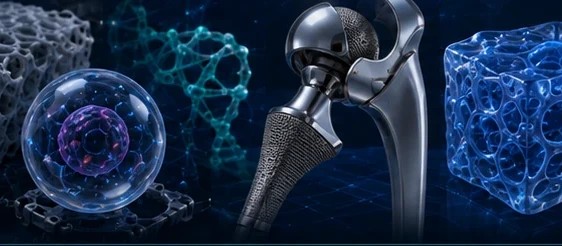
Application crosswalk to material families, environments and qualification focus.
Explore →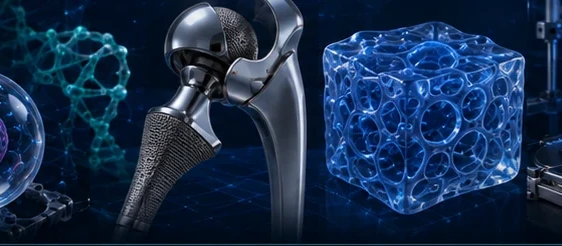
Application crosswalk to material families, environments and qualification focus.
Explore →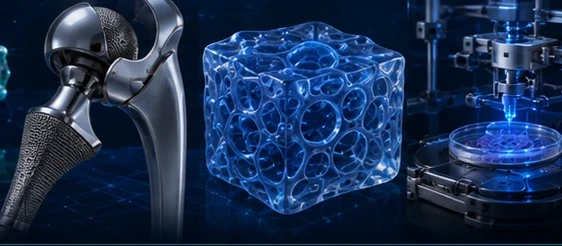
Application crosswalk to material families, environments and qualification focus.
Explore →