1.Functional Coatings & Treatments
Deposited, converted, plated and modified surfaces for wear, corrosion, conductivity, dielectric and contamination control.
Open Topic →Coatings, engineered interfaces, corrosion control, tribology, joining and surface metrology — treating the first microns and the bondline as mission-critical material systems.
Deposited, converted, plated and modified surfaces for wear, corrosion, conductivity, dielectric and contamination control.
Open Topic →
Barrier, sacrificial and conversion systems engineered around chemistry, defects, galvanic couples and repairability.
Open Topic →
Contact-pair engineering for friction, wear, lubrication, transfer films and debris across atmosphere, vacuum and temperature extremes.
Open Topic →
Adhesives, brazes, solders, diffusion bonds and mechanical interfaces treated as graded material systems, not geometric afterthoughts.
Open Topic →
Thermal-barrier, oxidation-resistant and environmental coatings that protect substrates through cyclic severe service.
Open Topic →
Transparent conductors, absorbers, reflectors, metasurfaces and EMI-control layers with tightly controlled roughness and thickness.
Open Topic →
Surface chemistry, porosity, texture and coatings that govern tissue response, biofouling, drug interaction and sterilization durability.
Open Topic →
Roughness, topography, thickness, chemistry, adhesion and defect mapping used to connect process state to service behavior.
Open Topic →| Material / Subfamily | Primary Engineering Functions | Environment / Interfaces | Processing / Qualification Focus | Cross-Project Links |
|---|---|---|---|---|
| Functional Coatings & Treatments | Modify surface behavior without requiring bulk-material replacement. | Substrate chemistry, cleanliness, residual stress, porosity and edge coverage control adhesion and function. | Surface preparation, thickness/uniformity, adhesion, hardness, conductivity/dielectric tests and defect inspection. | All Divisions · Manufacturing |
| Corrosion Protection | Interrupt electrochemical attack through barriers, inhibitors, sacrificial layers or conversion films. | Pinholes, crevices, galvanic couples, sealants, scratches and repair cycles dominate field performance. | Salt/fog or chemistry-specific exposure, electrochemistry, scribe testing, underfilm inspection and repair validation. | Infrastructure · Hydrogen · Marine |
| Tribology & Solid Lubricants | Control friction, wear, scuffing and transfer-film behavior at loaded contacts. | Counterface pairing, lubrication regime, debris, contact pressure, speed, temperature and atmosphere are inseparable. | Pin/disk or representative contact tests, wear volume, friction stability, debris analysis and life cycling. | Mechanisms · Vacuum Systems · Mobility |
| Joining & Bondline Interfaces | Transfer mechanical, thermal and electrical loads across adhesive, braze, solder, weld or diffusion-bond interfaces. | CTE mismatch, voids, surface preparation, galvanic couples and cure/heat-treatment history govern reliability. | Process coupons, NDE, shear/peel/fracture tests, thermal cycling, microscopy and failure-mode control. | Structures · Electronics · Pressure Systems |
| Thermal / Environmental Barriers | Protect hot or reactive substrates while managing thermal gradients, oxidation and erosion. | Bond coat, TGO growth, spallation, erosion and substrate expansion determine coating life. | Deposition control, adhesion, thermal cycling, oxidation, high-heat-flux exposure and spallation mapping. | Propulsion · Reactors · Extreme Environment |
| Optical, RF & Conductive Surfaces | Control reflectance, transmission, absorption, sheet resistance, polarization or electromagnetic interaction. | Roughness, contamination, thickness, substrate index and environmental drift can dominate response. | Spectral/RF characterization, sheet resistance, angle response, adhesion and environmental stability tests. | Communications · Sensors · Portal Field |
| Biointerfaces & Implant Surfaces | Control wetting, protein/cell interaction, osseointegration, fouling or controlled release at biological interfaces. | Sterilization, corrosion, wear debris, cleaning chemistry and host variability are key boundary conditions. | Surface chemistry/topography, extractables, corrosion/wear, sterilization cycling and biological evaluation. | BioSystems · Medical |
| Surface Characterization & Metrology | Measure process-created surface state so coating/interface performance can be traced and controlled. | Sampling scale, instrument resolution, contamination and spatial nonuniformity affect conclusions. | Profilometry, microscopy, spectroscopy, thickness mapping, adhesion tests and statistical process control. | Prototype Lab · Quality · Failure Analysis |
Thermal barriers, erosion resistance, vacuum tribology and contamination control.
Explore →
Electrical insulation, conductive layers, shielding and high-field interface stability.
Explore →
Corrosion control, hot-surface coatings, joints and heat-transfer interfaces.
Explore →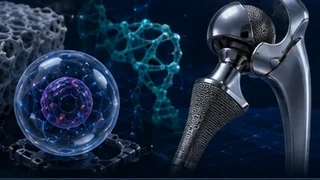
Recoating, repair, friction reduction and lifetime extension before bulk replacement.
Explore →
Surface prep trials, coating metrology, contact testing and interface failure analysis.
Explore →