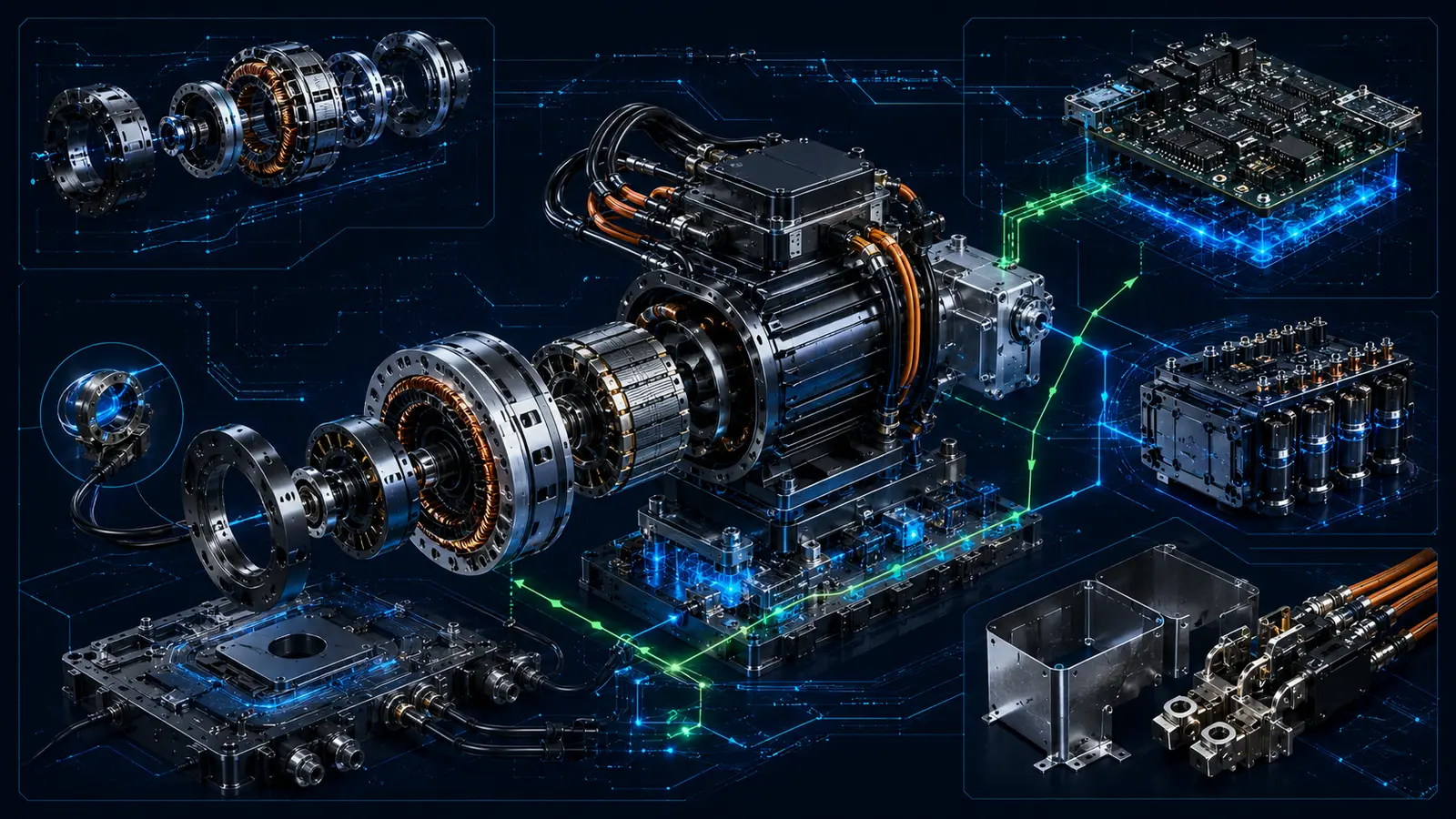
Motor selection, inverter and gate-drive design, energy storage, protection, regenerative operation, thermal control and electromagnetic compatibility.
Revision 1.9.1 · Phase 2 content and navigation review
Public-safe engineering gateway: this page explains responsibilities, interfaces, work products and review evidence without publishing application-specific dimensions, algorithms, allowables or unreleased performance data.
Engineering Role
Why This Gateway Exists
This gateway converts and manages electrical energy for electromechanical work. It joins machines, converters, storage, protection, regeneration, thermal paths and electromagnetic compatibility into a controlled power train.
Questions This Team Must Close
What torque, speed, duty cycle and energy flow must the drive support?
Which machine and converter topology best serves the operating envelope?
How are fault energy, isolation, braking and regeneration controlled?
How will losses, temperature and electromagnetic effects be verified?
Controlled Engineering Scope
Six Level-3 Topic Pages
Each daughter page defines a focused technical responsibility, the interfaces it must control and the evidence expected as the design matures.
Drive behavior is shaped by the mechanical load, supply and storage network, converter controls, feedback sensors, cooling architecture, grounding and system fault strategy.