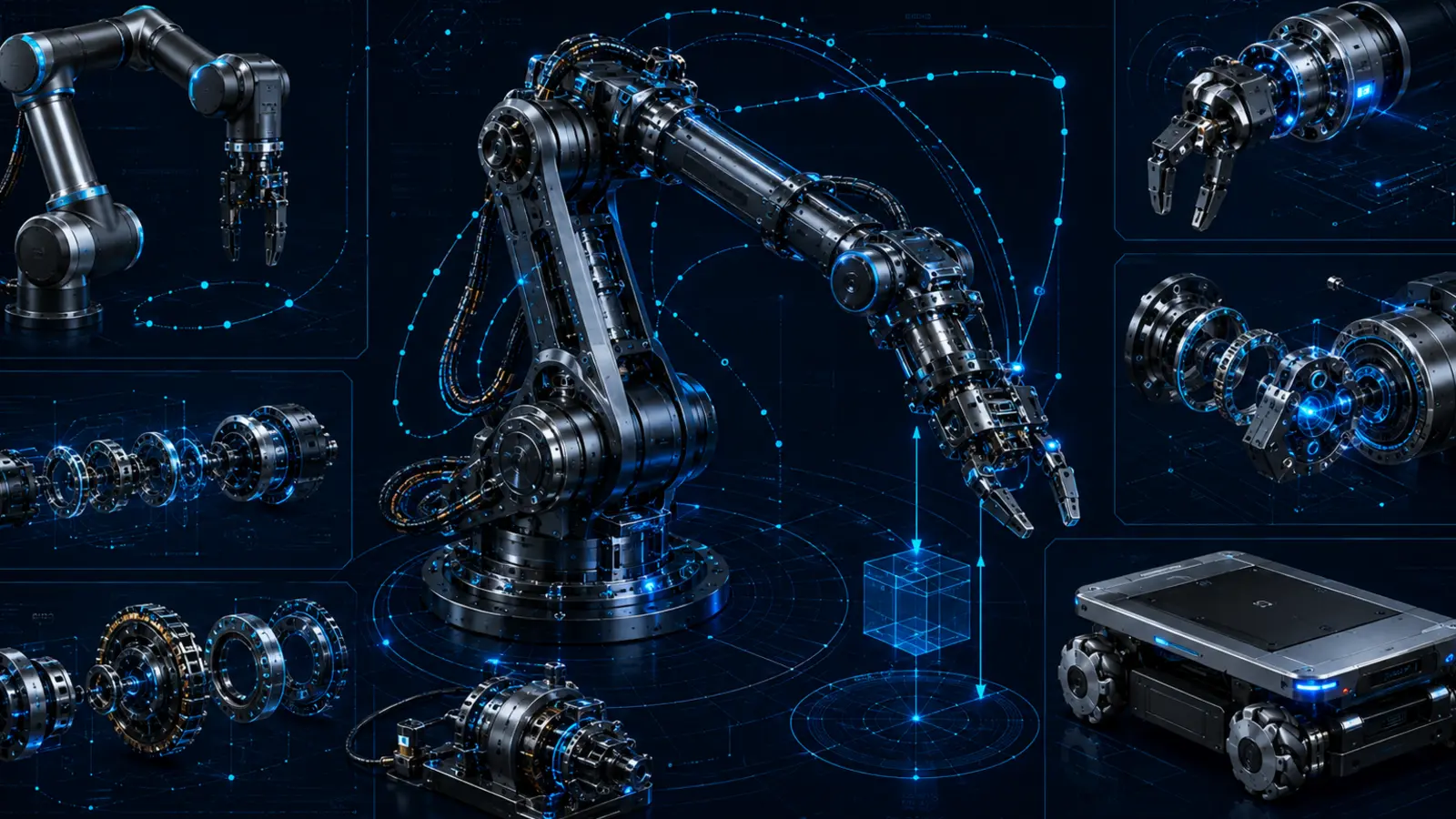
Mass, inertia, gravity, acceleration and payload effects used to size joints and manage dynamic performance.
Revision 1.9.1 · Phase 2 reviewed topic gateway
Public-safe scope: this page establishes engineering ownership, interfaces and evidence expectations. Application-specific dimensions, performance values, algorithms, design allowables and proprietary implementation details remain controlled.
Engineering Context
Purpose and Responsibility
Mass, inertia, gravity, acceleration and payload effects used to size joints and manage dynamic performance. Within Robotics, Kinematics & Manipulators, this topic is reviewed as part of the complete physical-and-digital control loop, with assumptions and ownership made explicit at every interface.
Parent-System Role
This gateway defines machines that place tools, sensors or payloads through controlled physical motion. It joins mechanism topology, kinematics, dynamics, end-effectors, perception and task planning into a realizable robotic system.
Engineering Workflow
Definition Through Verification
Define Translate the topic into bounded use cases, modes, requirements and acceptance criteria.
Analyze Model key behavior, uncertainty, loads, timing, energy and credible off-nominal conditions.
Integrate Control mechanical, electrical, optical, software, data, safety and human interfaces as applicable.
Verify Use configuration-matched analysis, inspection, simulation, demonstration or test to close requirements.
Typical Work Products
Workspace, reach and task-envelope studies
Kinematic and dynamic models
Manipulator, end-effector and payload interface definitions
Path, collision and task-validation evidence
Topic Family
Sibling Pages in Robotics, Kinematics & Manipulators